Notice · legal-mcps.ai provides
AI-assisted research tools over public government records (SEC EDGAR, USPTO). It is
not a law firm and does not provide legal, financial, or investment advice.
It is not affiliated with, sponsored by, or endorsed by the U.S. Securities and
Exchange Commission or the U.S. Patent and Trademark Office.
AI-generated summaries and rankings require professional review · verify
against the linked source filings before relying on any output.
Seven servers · one subscription · one prosecution record
A patent file is a public record. Which rule governed it is not in the
file.
Seven MCP servers for Claude, and for any other platform that speaks
the protocol. Patent search at the front door, free on its own and
uncapped here. Behind it, the text of the law and the one that dates
it, which with the search make USPTO Research Bundle, and the
prosecution record, the Board's docket, the Office's petitions and the
examiner's citations, which make USPTO Full Bundle.
Before chapter one: USPTO Patent Search,
the free front door, is part of this plan with its monthly cap lifted.
Prologue
Four ways prosecution research answers confidently and wrongly
None of these is a search that fails. Each one is a search that
succeeds and returns something a practitioner has to catch by hand.
Frontispiece
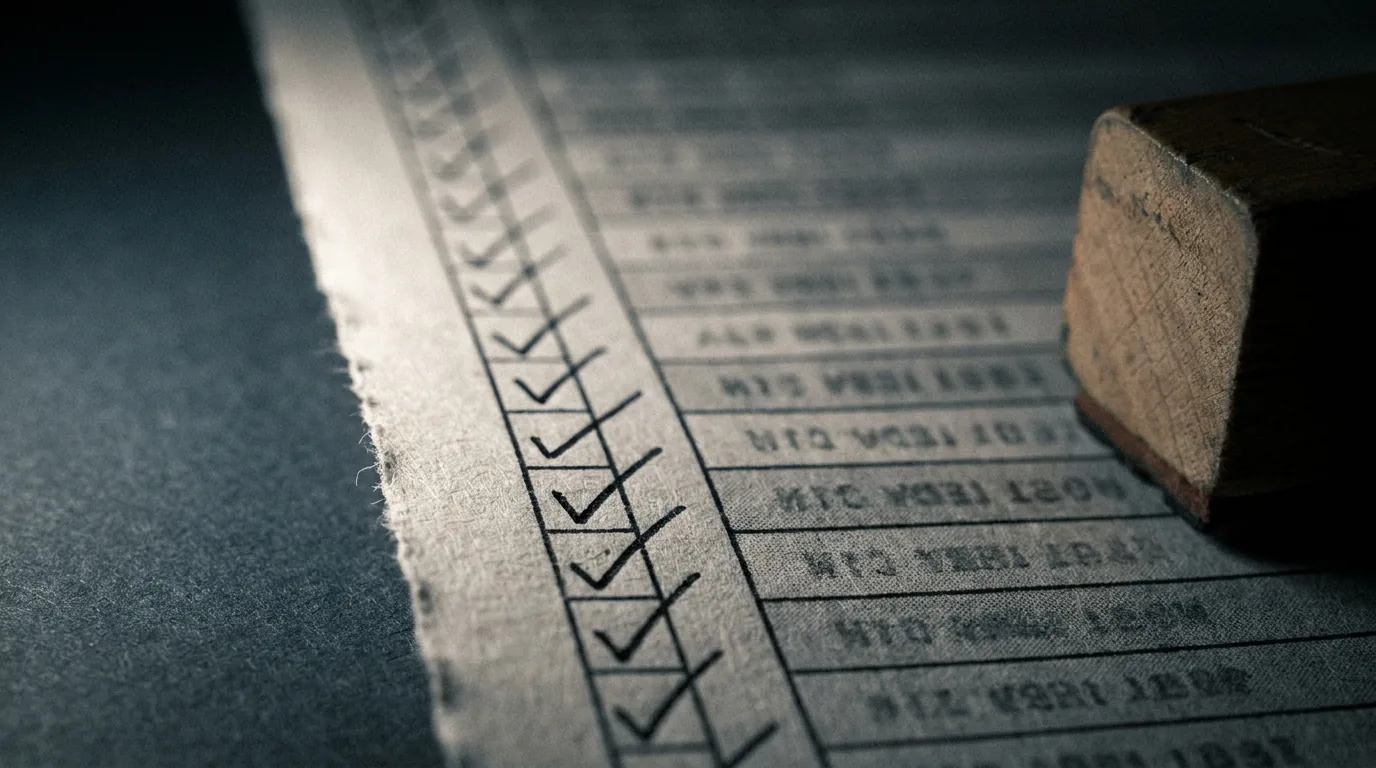
A page of a prosecution file under a window. The light decides
whether it is a document or a picture of one.
The argument is in a picture
The examiner's reasoning is the thing worth reading, and for a long
stretch of the record it exists as a scanned page inside a document
bag rather than as text. A keyword index cannot see into it, so a
rejection can be present in the file and absent from every search
run over the file.
The priority date that is not the priority date
The Office publishes a field called the effective filing date. For a
national-stage case it is the date of entry under section 371, and
for a continuation it is the child's own filing date. Build a prior
art cutoff on it and the cutoff inverts: references that are prior
art stop looking like prior art, and the search returns cleanly.
The right document, downloaded under the wrong name
Pulling the paper itself is the easy part. Naming it is not. What
lands in the downloads folder is a PDF called after the identifier
that fetched it, so an afternoon of research ends as a row of files
that can only be told apart by opening them. The research succeeded.
A week later the record of it is unusable.
The file wrapper, the Board and the petitions each answer with a
download link that stays live for a day, and the file arrives
named out of the record rather than out of the request: the
application or the proceeding, the patent, and what the paper is.
The rule that stopped being the rule
Discretionary denial practice has been rewritten repeatedly since
2018, and the Office rescinded its own interim procedure on 28
February 2025. Ask about a petition filed in 2023 and the rescinded
memorandum is the answer. Ask the same question without a date and
you get today's regime applied to a proceeding it never governed.
A rule applied to the wrong side of a regime change is wrong
silently. Nothing in the answer looks different.
Chapter IUSPTO Patent Search
The front door, with the cap off
Every US patent grant since 1976 and every published application since
15 March 2001, searched in place: PatFT field codes, semantic search by
meaning, keyword search by exact words, and the theme layer that names
the neighbourhood a subject falls in. On its own it is the free tier,
150 calls a calendar month. Here the
cap comes off.
Both paid tiers include the unlocked edition: searches without a monthly
count, and the browser search page, laid out like the Office's former
PatFT, which any results panel opens and the free tier does not get.
Every result names the calls on the servers below that reach the live
record of what it found, which is why the search comes first and the
rest of this page follows it.
The search has a page of its own, with the real queries and what they
returned. Read it there.
Chapter IIMPEP retrieval
Plate I
The bound volume and the loose sheaf laid across it, read under
the one lamp. Neither finds everything on its own.
The text of the law, retrieved two ways at once
Search over legal text fails in two opposite directions, and both
failures read as success. Keyword search finds the section that happens
to use your term and misses the section that governs your situation
under a different name. Meaning-based search finds the passage that is
about your topic and cannot tell a term of art from a description of
one, so it will hand you a discussion of restriction practice when you
asked about a restriction requirement.
So this server runs both and fuses them, and the balance between them
is a dial rather than a setting. It is turned per question, by the
assistant making the call, which is the only party that knows whether
what was just typed is a defined term or a theme. Reranking can be
tightened, loosened or switched off for a single question without
changing anything for the next one.
Both halves of that retrieval can be pointed at the firm's own
machines. The embedding endpoint is configuration rather than
architecture, so the model that turns a question into a vector can be
one the firm hosts itself, and the reranker is the same: bring your
own, or run a question with reranking switched off and take the fused
ranking as it stands. The text being searched is published government
record. The question asked of it is usually the work product, and the
question is the part that never has to leave the building.
The corpus is stratified by legal weight, and the stratification is
enforced as a filter rather than described in prose. Statute sits above
binding case law. Below the courts, and beside the manual rather than
above it, sit the Board's precedential and informative decisions,
Director review decisions and the Commissioner's decisions. The manual
itself sits above the Federal Register and Official Gazette notices that
can supersede it, and all of that sits above examination guidance, which
never supersedes anything. That order is what lets an answer say which
of two passages wins.
A retrieved passage arrives knowing where it sits. The range of the
section around it travels with the result, so reading the whole section
is one more call rather than three. A chunk is the right size for
finding a rule and frequently the wrong size for reading one, because
the sentence you matched starts in the middle and the definition you
need is in the paragraph above it.
A question can also be asked in several framings at once. Name a domain
and the server runs that domain's own hand-written framings of the
question in parallel and fuses them, on the principle that no single
phrasing of a legal question is reliable and a set of them behaves
better than the best one alone.
What is in it: the Manual of Patent Examining Procedure, Ninth Edition,
Revision 01.2024, complete from chapter 0100 through 2900 with its
appendices, more than two thousand eight hundred court opinions and
orders running from 1810 to this year, most of them Federal Circuit and
most of the rest Supreme Court, the Board's precedential and informative
decisions and Director review decisions, Federal Register documents
from 1995, and Office notices from 1994. All of it public record, all
of it carrying the source it came from.
Two rules the corpus is built under. A source link is never written
unless it was fetched and answered, so every passage the server returns
carries the direct public address of the document it came from, the
USPTO page, the court's own PDF, the Federal Register entry, and the
model can hand you that address beside the sentence it supports, for
checking the citation yourself. Where a source has only an index page,
the passage says so and gives the citation as text rather than a
guessed link. And text is never paraphrased on the way in, so what comes
back out is what the document says.
On the summaries
Each document carries a machine-written orientation summary, and the
server labels it as exactly that: an aid for deciding what to open,
not evidence. It has been observed to get procedural direction wrong,
saying a case was remanded where it was reversed. The label ships with
the summary rather than living in documentation nobody reads, and the
finding you cite comes from the opinion.
Chapter IIIThe hypergraph
Plate II
The register runs the whole length of the drawer. A date decides
which band of it is lit.
Which rule governed, on the day it mattered
The division of labour between these first two chapters is the plainest
thing about them. The text server holds the documents that apply and
record the law. This one holds the documents that change it.
It keeps prosecution and post-grant facts as a temporal graph, and
over that graph a register of framework shifts: Supreme Court and
Federal Circuit decisions, Office guidance and rulemaking, designated
Board decisions and the trials themselves, each carrying the date it
took effect and, where one exists, the date something displaced it.
A shift never edits the facts it re-governs. The prosecution record
is evidence and stays as filed; the governance is a separate layer
attached over the top of it.
Ask it a question and the date is required. There is no default to
today, on purpose, because every failure this server exists to
prevent is a question that silently used now. Each named pattern
declares which event its date should be, so a petition question wants
the petition filing date, a time-bar question wants the date the
complaint was served, and an appeal question wants the notice of
appeal.
What comes back is the regime sorted into four groups: in force on
that date, not yet in effect on that date, already superseded by it,
and, separately, any shift the corpus holds with no effective date at
all. That fourth group exists because an undated rule silently filed
under "not in force" is precisely the failure the tool was built to
stop. No model is asked to judge any of it: the retrieval fuses its
sub-queries by rank, and the dating is arithmetic over dates the
corpus carries.
The semantic half of this server is configurable the way the text
server's is. Point it at an embedding endpoint the firm runs, bring
your own reranker or none, and the questions put to the graph stop
at the firm's own boundary. The dating never left it in the first
place: comparing two dates is arithmetic, and arithmetic does not
call a vendor.
Move the date
Ten of the framework shifts bearing on discretionary denial, read out of
the server on 10 October 2026. The dates are its own. Set the date a
petition was filed and the register sorts itself.
Petition filedJune 2023
201820222026
Nothing about a row changes when you move this. Its dates were fixed the
day it issued. What changes is which of them your question falls between.
Apple v. Fintiv, IPR2020-00019, Paper 11Effective 20 Mar 2020
The factors for discretionary denial under section 314(a) where
parallel district court litigation is running.
Interim Procedure for Discretionary DenialsEffective 21 Jun 2022, superseded 28 Feb 2025
Office guidance limiting reliance on the Fintiv factors where the
petition presents compelling evidence of unpatentability.
Rescission of the interim discretionary-denial memorandumEffective 28 Feb 2025
Withdraws the June 2022 guidance and returns the Board to its own
precedent. Decisions resting on the withdrawn memorandum lose force to
that extent.
Interim Processes for PTAB Workload ManagementEffective 26 Mar 2025, superseded 20 Oct 2025
Office memorandum splitting discretionary-denial briefing from the
merits and putting the first discretionary call with the Director,
in consultation with Board judges.
Director Institution of AIA Trial ProceedingsEffective 20 Oct 2025
Institution decisions for AIA trials are made by the Director rather
than delegated to Board panels. Displaces the March 2025 interim
process.
Plate III
A docket open at the place the knife marks. The pages before it
are lit. The pages after it are not yet.
A petition filed in June 2023 is governed by a memorandum that no longer
exists. A search that never asked for a date will not mention it.
That is the whole argument for dating a legal graph. The rescission is
real and current and correct, and applying it to a 2023 petition is
still wrong. So the server reports the two facts separately: what
governed then, and what has displaced it since, with the direction of
the displacement on the edge.
Proposals are handled the same way, which is to say they are not
promoted. A rule that has only been proposed sits in the corpus as
retrievable text and is not registered as a shift, so an as-of query can
quote the proposal's language and never count it as law. The same
discipline runs forward through the guidance line: the Office's February
2024 inventorship guidance for inventions made with the help of
artificial intelligence, 89 FR 10043, carries its own supersession by
the revised guidance at 90 FR 54636 on 28 November 2025, so a question
dated before that November still gets the earlier one.
Retrieval is built to find what resembles. An attorney is paid to find
what differs. A date is one of the places those two come apart.
That pair is worth staying with, because it is where searching by
resemblance fails hardest and most quietly. Guidance that matters
arrives with a programme behind it: the notice, then the memoranda to
examiners, the training material, the outreach sessions and everything
written about all of that. The short revision that displaces it two
years later arrives with none of it. So the older regime is the one an
index has more of, and volume is what a similarity score is counting
when it says a passage is the closest match. Nothing about that ranking
changes on the day the rule stops being law, because the rule stopping
is not a fact about the text.
Which is why the order of operations here runs the other way round from
the usual one. The graph settles what was law on the date in question
first, by arithmetic over dated edges, and retrieval then works inside
that perimeter and fetches the words. Neither half is asked to do the
other's job: nothing is ranked into force, and nothing is dated by
resemblance. The same discipline covers the other ways a legal document
loses its meaning in transit. A passage keeps the section it came from,
because the identical sentence under two different section headings can
carry opposite consequences, and a clause keeps what it hangs off,
because an exception read without the rule it modifies is not a weaker
answer but an inverted one.
A structure built this way is not primarily a faster way to look things
up. It is a defensive one. The point is that a fluent, well-cited,
confidently worded answer cannot be assembled out of a rule that was
withdrawn last year, and that when an answer does come back, what it
rests on is inspectable: which fact, which edge, which date, and which
parts of the response the server worked out rather than read. Speed is
what a firm notices. The defence is what it is actually buying.
Where the authority that displaced a rule sits outside the part of the
corpus a question reached, the answer says so in those words. There is a
real difference between nothing having displaced a rule and not being
able to see what did, and only one of them is a finding.
Facts with more than two ends
Most knowledge graphs store a fact as a subject, a predicate and an
object. Prosecution facts rarely have two ends. One finding out of this
corpus, on the Board declining to exercise discretion in IPR2020-01019,
carries six participants and every one of them has a named role: the
Board as the decisionmaker, patent RE47,353 E as the challenged patent,
section 314(a) as the discretionary institution statute, the inter partes
review as the proceeding, the district court as the parallel forum, and
the proceeding number as the identifier.
Split that into pairs and the roles are the first thing lost. You are
left knowing that a district court and a patent and a statute are
associated with a proceeding, and not knowing which was the forum, which
was challenged and which was applied. The same loss is worse in an
obviousness rejection over two references, where which one is the primary
reference and which one is secondary is a legal position and not a
detail. Facts here carry three or more participants by construction;
anything genuinely two-ended stays an ordinary edge, because that is what
it is.
What the server derived, and what it quoted
Every response names the fields it computed rather than read. Whether a
shift was in force on your date is arithmetic the server did. The note
explaining how a shift re-governs a fact is the server's characterization
of it, not language quoted from the authority. Even a citation link is
flagged, because it is built by rule from the source document rather than
read off the record. All of it is useful and none of it is a source, so
the labelling travels with the answer and nothing downstream inherits an
inference as a finding.
The same care runs down to how a shift bears on a fact. It can confirm
it, narrow it, expand it, clarify it or abrogate it, and it can also be
recorded as bearing on it in none of those ways. That last one is a
finding, not a blank: somebody looked and found no governance, which is
different from nobody having looked yet, and the two are stored
differently.
Everything in this corpus is published government record: the manual, the
regulations, case law, examination guidance and Office guidance. A single
answer reports which of those bodies attested a doctrine, so the same
rule found in three of them arrives corroborated rather than counted
three times.
Chapter IVPatent File Wrapper
Plate IV
The whole prosecution history, and the one document that answers the
question.
The file wrapper, read rather than downloaded
The Patent File Wrapper server returns the examiner's actual text in
a single call. Not a document list and not a document to go and read
somewhere else: the body of the office action, or one section of it,
as text you can quote. Ask for the section 103 rejection in the final
action and that is what arrives.
Much of a file wrapper is not text at all. Papers were filed as
images, and a flat scanned PDF is a picture of a document as far as
any index is concerned. So there is a second way to read, for the
documents the first way does not reach: the server fetches the
document, takes the text where the text exists, and where the page
is an image reads it with OCR. What comes back is the words on the
page rather than the fact that a page exists, which is the
difference between a model that can advise on a document and one
that can only report that it is there.
The two are worth telling apart. The indexed lane is one call and it
answers for office actions. The reading lane will take on any
document in the wrapper, a declaration, an interview summary, a
decades-old amendment filed as a scan, and it takes a document fetch
rather than a lookup. Reach for the first when it covers the question, and the
second when it does not.
Before reading anything, there is a triage pass that says which
office actions in a prosecution carry rejections under 101, 102, 103
or 112, which of them raise obviousness-type double patenting, which
carry an eligibility flag, and which claims each rejection was
directed to. On a long prosecution that is the difference between
reading two documents and reading twenty.
Continuity comes back as a graph rather than a list. Parents,
children, the relation on each edge in the Office's own vocabulary,
continuation and continuation-in-part and divisional, foreign
priority claims, and the earliest ancestors reached by walking the
chain up rather than by trusting a single field. An application with
no parents and no children says so, because empty is an answer here
too.
Patent term adjustment arrives with the arithmetic shown: total days,
the A, B and C delays, applicant delay, and the event history behind
them. It stops there deliberately. It does not compute an expiration
date, because expiration also turns on terminal disclaimers,
maintenance fees and any extension under section 156, and a number
that quietly ignores three of those is worse than no number.
Coverage
The structured rejection triage runs over office actions mailed
from 1 October 2017. The office-action text reaches back
considerably further, roughly to 2008 on measurement rather than
by any published guarantee, so an empty triage result is not
evidence that the text is unavailable.
Chapter VPatent Trial and Appeal Board
Plate V
Three proceeding families sit behind the same bench and are indexed
separately.
Trials, appeals and interferences, in one index
The Board runs three different kinds of proceeding and most tools
cover one of them. This server covers all three: inter partes,
post-grant, covered business method and derivation trials; ex parte
appeals from examination; and interferences. A portfolio question
that touches two of the three does not become two research projects.
Party matching respects sides. A search for a petitioner returns the
proceedings that party filed, and a search for a patent owner returns
the proceedings brought against it, so a company that is both never
arrives as one undifferentiated pile. A list of up to two hundred
trial numbers resolves in a single call, which is what a portfolio
screen actually looks like.
The appeals lane carries the fields that make examination patterns
visible: art unit, examiner, decision date, and the outcome as the
Board recorded it. The docket comes back with real document
categories, petition and preliminary response through institution
decision, motions, oppositions, replies, the final written decision
and any rehearing, filed by the Board, the petitioner or the patent
owner, and the text of any of them can be read in the same
conversation.
Search returns proceedings and status. It does not return which
claims survived, and it declines to guess: that answer is in the
decision, so the decision is what you are handed.
When the record is incomplete
Some dockets are sealed to the point where the Board's own paper is
absent. The response says so rather than returning a bare empty
result, because an empty list is otherwise indistinguishable from
a proceeding in which no decision issued.
Chapter VIFinal Petition Decisions
Plate VI
One decision, and the empty space beside it, which is also a finding.
Petitions, and the meaning of nothing
Petition decisions are where a prosecution's difficulty shows. A
revival petition under 37 CFR 1.137 means the application went
abandoned. A petition under 1.181 means somebody took a dispute with
the examiner over the examiner's head. Several petitions on one
application is a shape worth seeing before a diligence call rather
than during one.
The dataset changed shape in the first week of October 2026. Until
then the Office published about seven and a half thousand final
decisions, nearly all of them denials. Read on 5 October 2026, it
holds more than one point one million records: every petition
decision since 2001, the automatic ePetition grants included.
Roughly eight hundred and eighty thousand grants, two hundred and
twenty thousand dismissals, seven and a half thousand denials, and
under two thousand grants in part. A flag marks the final decisions,
the old set, apart from the rest; the petition type codes now number
191 and can be listed; every record carries its document; and the
decision text is searchable in full.
The server searches by applicant, application, patent, decision type,
deciding office, art unit and date, with no query language to learn,
and takes a final-only filter that narrows the million to the
decisions somebody sat down and wrote. A first pass is a scannable
index; the complete record, with every issue raised, the rules and
statutes cited and the full timeline, is pulled only for the decision
you actually want to read. The shape worth seeing is now read with
the flag: a run of automatic grants on one application is routine,
and a final decision among them is the one to open.
Three tools arrived with the data. FPD_get_petition_statistics returns
counts and grant, dismissal and denial rates for any scope, by type,
art unit, technology centre, rule, statute or dates, broken down by up
to four dimensions, from the Office's own facet counts.
FPD_get_dismissal_grounds reports where a scope's dismissals fall,
with the newest dismissal decisions to read, because the Office
records no reason field. FPD_list_petition_types gives the 191
petition type codes with the Office's own names and live counts, so
"revival" or "PTA" becomes a code the other tools take.
Decisions are served verbatim. Where a decision was filed as an image
it is transcribed rather than summarized, because legal research
depends on the words as filed and a tidying pass would quietly change
what you are quoting. Long decisions are paged rather than cut short,
with the window snapping to page boundaries, so nothing is lost
without being announced.
A genuine zero
When there is nothing to return, the answer says it is a genuine
zero and not an error. It then says the one thing that keeps that
claim honest: the server cannot tell a filter value that is merely
absent from one that is misspelled, so it tells you to re-run
without the narrowest filter to distinguish them.
Coverage is the second half of reading a zero. Petitions are held
for applications and patents filed in 2001 or later, and since the
October 2026 change the decisions run from 2001 as well, automatic
grants included. So a zero on an application now says that no
petition of any kind was decided on it, which is a stronger
finding than the old set could make, and the server says which
kind it looked for. The papers themselves are still in the file
wrapper, two chapters back.
Dated capture, 5 October 2026, the week the dataset changed. The
figures above are the Office's own facet totals that day, stated
as floors and rounds, never as a served count.
Chapter VIIUSPTO Citations
Plate VII
The office action index: what was cited, and under which section.
Two indexes of the same examiner's citations
The Office publishes the examiner's citations twice, through two
APIs with two schemas, and neither contains the other. This server
serves both, as two lanes with their own tools, and the working rule
is to ask both: on one application the office action index returned
4 records and the enriched index 8, and on another the office action
index returned 38 against 26. Which lane holds more is a property of
the application in front of you.
The office action index is the citation list itself,
transcribed from the examiner's Form 892 and the applicant's Form
1449. Its tools are
Citations_search_oa_citations_minimal and
Citations_search_oa_citations_balanced, and
it alone carries the statutory basis a reference was cited under
(legalSectionCode, 102 or 103 or 112), the
type of action it appeared in (actionTypeCategory)
and the broader inventory of what the applicant disclosed. It has no
date field at all: the timestamp it carries is the date the record
was loaded, never the date the action was mailed.
The enriched index is an AI-extracted reading of a
subset of office actions. Its tools are
Citations_search_citations_minimal and
Citations_search_citations_balanced, with
Citations_get_citation_details for one
record in full and Citations_get_citation_statistics
for aggregations, and it alone carries the relevance code (X, Y or A),
the claims a reference was cited against, the passage locators the
examiner pointed to, and officeActionDate,
the one date either index has.
Ask one index for a field the other was built to hold and it does not
return fewer results. It returns an error and none at all. The one
field both answer to is the application number, which is the join.
Coverage, and what a zero means
The Office documents both APIs as covering office actions mailed
from 1 October 2017. Both have been observed serving older
prosecution: the reading below is on a 2012 application. So an
older matter is worth querying rather than ruling out, and a zero
in one lane is not evidence of no citations in the other. The
examiner's name is in neither index; it is in the file wrapper,
three chapters back.
Plate VIII
The enriched index: where in the document, and against which claim.
One reference, read from both sides
US 2006/0075466 A1, on application 12849948. Both indexes hold it.
Neither of them holds this much of it.
Office action index
Cited by the examiner, in a rejection, under section 103.
Enriched index
Relevance code X, cited against claims 12, 16, 19 and 20, at the
figures and paragraphs the examiner pointed to, on an office action
mailed 7 June 2012.
Joined on
The application number, which is the one field both indexes answer to.
Neither half is the answer. The statutory basis without the claim mapping
does not tell you what the reference was aimed at, and the claim mapping
without the statutory basis does not tell you what it was aimed with. The
pair does, and assembling the pair is two calls and a join on a number
both sides carry.
Dated capture, 2 September 2026, re-read on the enriched side on 10 October
2026. Per-application readings on a named application, never a count of
either index.
Colophon
One timeline, from the first office action to the last decision
The seven servers share the identifiers the Office already uses. A patent
search ends by naming the calls that reach the live record; an application
number joins the file wrapper to the petitions and to both citation
indexes, a patent number joins it to the Board, and an art unit joins them
all. The text server and the graph share a vocabulary of their own: one
domain name is a pattern on the graph and a domain on the text server, and
they answer it differently on purpose, one with the passage and one with
its dates. So a single conversation can run from a search through the first
office action and the petitions to a final written decision, and ask which
rule governed at each step, without leaving it.
Connect all seven to Claude and put a real application through them.
Auto-renews at the then-current price until cancelled. Cancel any time
from your account's billing portal; cancellation stops future renewals
and does not itself refund the current period.
USPTO Full Bundle (Patent Search + PFW + PTAB + FPD + Citations + MPEP RAG + Hypergraph) is a research tool over public Office records. Retrieved
document text is treated as quoted data and never as instruction, and an
examiner's or a petitioner's characterization is an attributed position
rather than an established fact. Summaries and rankings are AI-generated
and require professional review; verify against the linked source document
before relying on any output. Coverage floors differ per server and are
stated in each chapter above, because a zero result means nothing until you
know what the server can see.